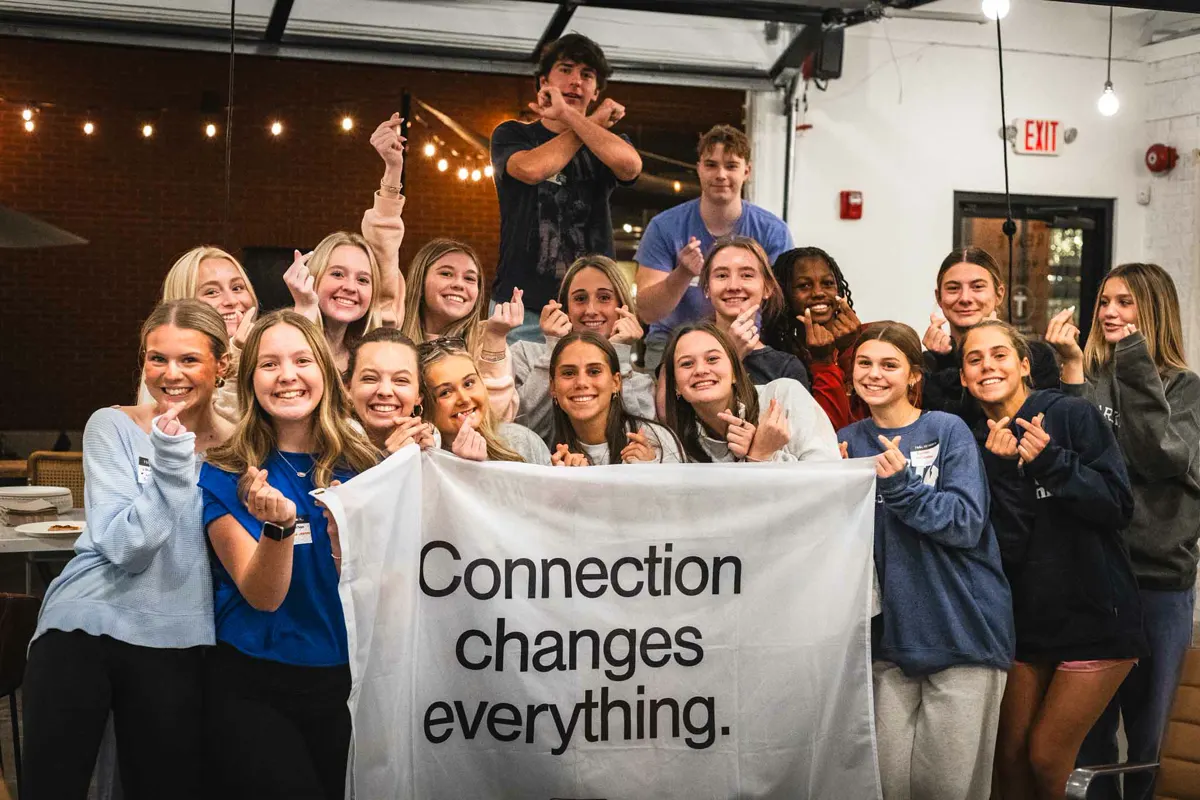
What did the new study find?
A brand new study from the Child Mind Institute found that 88% of 14 to 17-year-olds see in-person, face-to-face interaction as a crucial part of feeling connected to others.
This suggests that students aren't just resigned to the digital status quo. They still long for an experience of genuine, in-person community. But will they find it?
Does being connected online protect teens from loneliness?
The study asked 1,000 14 to 17-year-olds how connected or disconnected they felt across five domains: with their family, with peers, with their school, with themselves, and online. A feeling of connection in the first four areas had a protective effect against loneliness. The study found no meaningful reduction in loneliness from someone's digital connection.
In fact, the more time a teen spent passively scrolling videos and images online, the worse their Average Loneliness Score tended to get.
"Despite growing digital engagement, teens overwhelmingly reported that face-to-face peer relationships remain essential to feeling connected."
Child Mind Institute

It can be easy to imagine that because teens are so tech-savvy, digital connection is all they'll ever want, despite its shortcomings. But this study shows that teens still want in-person, face-to-face interaction, and that they understand the benefits that come with it.
How do we help teens find that connection?
Part of the issue is that teens don't always know how to find that connection, or where to look for it. The time spent making digital connections online gives very little practice at starting a conversation in real life and beginning to find common ground with the people around us.
This is the problem that Whisper Gatherings and the Whisper Conversations™ Box Set were created to help solve: equipping student leaders to create intentional spaces for conversation with other students.
Field notes: our new website is live
Today marks the official relaunch of our website, whisperconversations.com.
The new site is focused on how and why we equip student leaders to facilitate intentional conversations through Whisper. It makes it much easier for students, principals, legislators, parents, coaches, business leaders and pastors to understand the problem (teen loneliness), the solution (intentional conversations), and to quickly bring Whisper to their own communities.
We also wanted to show how other schools are already using Whisper, and the difference it's making in school cultures and in the lives of individual students.
"I thought I was alone, but when I came to Whisper, I realized there were so many people going through the same things I was. I realized I wasn't alone."
Elana
"I used to sit down before class or in a waiting room, or anywhere, and instantly get on my phone or talk to the only person I know in the room. Now whenever I have the opportunity to reach out to someone, get to know them, and start a conversation, I do."
Luke
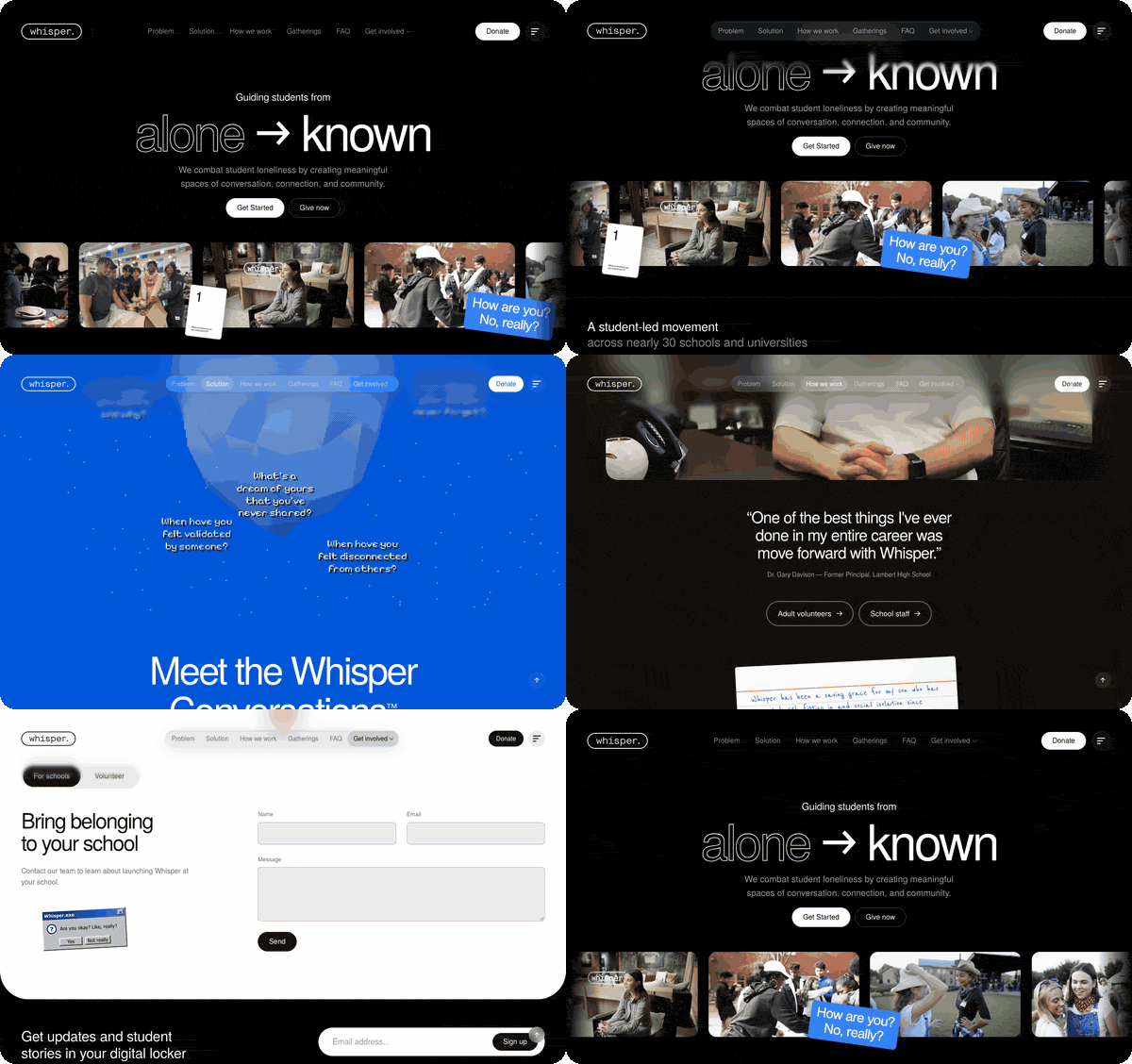
The site is now also a home for Whisper volunteers:
- A free Wiki: videos, guides for gatherings and conversations, and downloadable tools.
- Studio: make personalized, shareable invites for your next Whisper gathering.
This site is part of our plan to grow to the next 100 schools, and eventually to every school in America. Our old site said little about how Whisper actually works and was built mostly around giving. It was time for a new one.
We'll be adding more in the coming weeks and months. Take a look around, and if you'd like Whisper at your school, tell us about it.